
The Honest Verdict: Is ACCA Worth It in 2026?
Let's cut through the noise. If you search "is ACCA worth it," you'll find two extremes — either enthusiastic coaching centre promotions or cynical dismissals from people who never completed it. Neither is useful. This article gives you the real picture: hard salary data, actual ROI timelines, and — crucially — a frank assessment of who should not pursue ACCA.
The short answer: ACCA is worth it for the right person, and a poor investment for the wrong one. By the end of this article, you'll know exactly which category you fall into.
ACCA (Association of Chartered Certified Accountants) is a globally recognised professional accounting qualification with over 252,000 members in 180+ countries. In India, demand for ACCA-qualified professionals has grown sharply as multinational companies expand their India operations and domestic firms seek globally literate finance talent.
But recognition doesn't automatically equal ROI. Let's look at the numbers.
ROI Analysis: What ACCA Actually Costs vs. What You Earn
Understanding the return on investment requires mapping total cost against salary uplift over time. The figures below are based on 2025–2026 data for India-based candidates pursuing ACCA alongside or after their undergraduate degree.
Total Cost of ACCA (India, 2026)
| Cost Component | Approximate Amount (INR) | Notes |
|---|---|---|
| ACCA Registration Fee | ₹9,500 | One-time |
| Annual Subscription | ₹10,500/year × 3 years | ₹31,500 total |
| Exam Fees (13 papers) | ₹7,000–₹14,000 per paper | ₹1,00,000–₹1,60,000 total |
| Study Materials (official) | ₹30,000–₹50,000 | Kaplan / BPP books |
| Coaching Classes | ₹80,000–₹1,50,000 | Varies by provider |
| Resit Fees (average 2–3 papers) | ₹20,000–₹35,000 | Most candidates resit at least 1–2 |
| Total Investment | ₹2,70,000–₹4,30,000 | Over 3–4 years |
This total investment of roughly ₹3–4.3 lakhs may seem significant, but compare it to a two-year MBA (₹15–25 lakhs at a mid-tier college) or a CA articleship + coaching commitment of 3–5 years with limited international portability.
Salary Uplift: The ROI Timeline
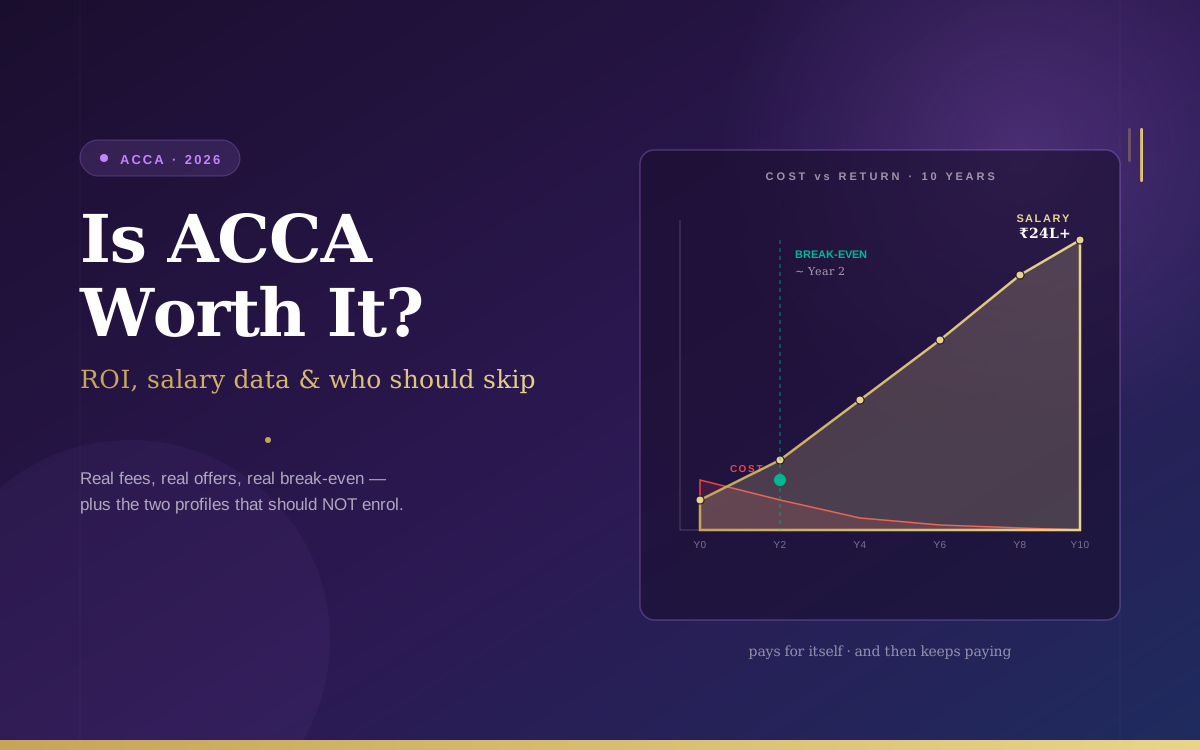
The chart below illustrates cumulative career earnings trajectory for an ACCA affiliate versus a non-qualified finance graduate over a 10-year period, based on median salary data from Indian job market surveys and ACCA's own 2024 Global Salary Survey.
The breakeven point — where cumulative ACCA earnings surpass the non-qualified path plus the cost of the qualification — occurs around Year 4–5 post-completion. From Year 5 onwards, the advantage compounds significantly. By Year 10, the median ACCA professional in India earns approximately ₹86 lakhs more in cumulative earnings compared to a non-qualified counterpart.
ACCA Salary Data Evidence (India & Global, 2025–2026)
Numbers matter. The table below compiles salary data from ACCA's own Global Salary Survey 2024, Glassdoor India, and LinkedIn Salary Insights for ACCA-qualified professionals.
India: ACCA Salary by Experience Level
| Experience Level | Role Example | Median Annual CTC | Top Quartile CTC |
|---|---|---|---|
| ACCA Affiliate / Fresher (0–1 yr) | Finance Analyst, Junior Auditor | ₹4.5–6.5 LPA | ₹8–10 LPA |
| ACCA Member (2–4 yrs) | Senior Finance Analyst, Audit In-charge | ₹8–12 LPA | ₹14–18 LPA |
| Mid-Level (5–8 yrs) | Finance Manager, Assistant Controller | ₹15–22 LPA | ₹25–32 LPA |
| Senior Level (8+ yrs) | CFO, Finance Director, Group Controller | ₹28–50 LPA | ₹60 LPA+ |
Global Comparison: ACCA Member Salaries (2025)
The global salary data makes one thing clear: ACCA's financial returns are amplified enormously when paired with international mobility. An ACCA member moving from an India-based role to a UAE or UK position can expect an immediate 3–4x gross salary increase. This international portability is ACCA's single greatest competitive advantage over Indian-specific qualifications like CA.
Who ACCA Is Perfect For
ACCA suits a specific type of candidate extremely well. If you match several of these criteria, the qualification is likely to deliver strong ROI for you.
1. Commerce Graduates & BCom/BAF/BMS Students
Students with a commerce background qualify for significant paper exemptions — typically up to 9 out of 13 papers if you have a BCom from a recognised university. This dramatically reduces the time and cost of completion. A BCom graduate can potentially finish ACCA in 18–24 months, making the ROI equation very attractive.
2. Professionals Targeting International Careers
If your medium-term goal includes working in the UAE, UK, Singapore, Australia, or Canada — ACCA is the single most globally recognised accounting qualification for career mobility. CA (Indian) has very limited recognition outside India. CPA is US-centric. ACCA's MRA (Mutual Recognition Agreements) with local bodies in 50+ countries gives you genuine international optionality.
3. Those Who Cannot Commit to CA's Articleship Structure
CA requires a 3-year mandatory articleship under a practicing CA — a rigid structure that doesn't suit everyone. ACCA's practical experience requirement (PER) is more flexible, allowing you to fulfil it through regular employment. If you're already working or want to work during your studies, ACCA accommodates this far better than CA.
4. Professionals in Global Capability Centres (GCCs) or MNCs
India now hosts over 1,600 GCCs of Fortune 500 companies. These organisations specifically value ACCA because their finance reporting follows IFRS — the international accounting standard that ACCA comprehensively covers. CA professionals often need to re-skill for IFRS; ACCA professionals are IFRS-native from day one.
5. CA Dropouts or Those Who Struggled with CA
This is an underappreciated use case. Many candidates who found CA's examination system gruelling (particularly IPCC/Intermediate) find ACCA's modular structure and consistent international pass rates more manageable. This isn't about ability — it's about fit with examination format and career goals.
Who Should NOT Do ACCA (Honest Assessment)
This section is the one most coaching centres won't show you. ACCA is the wrong choice for some candidates, and recognising this early saves significant time and money.
1. If You Want to Practice as a Statutory Auditor in India
Full stop: ACCA does not qualify you to sign audit reports in India. Statutory audit of Indian companies requires CA (ICAI) membership. If your career goal is to run an audit practice in India, ACCA is not the right primary qualification. You may consider it as a supplement to CA, but not as a replacement.
2. If You Cannot Commit to All 13 Papers
One of the most wasteful outcomes in finance education is an "ACCA student who stopped at Applied Skills." Without ACCA membership (which requires completing Strategic Professional level + PER + Ethics module), the qualification has minimal market value. If your life circumstances or finances mean you genuinely cannot commit to full completion, the ROI calculation breaks down sharply. Be honest with yourself before investing.
3. If You're Purely Targeting Domestic Indian SME Finance Roles
For roles like accounts executive, GST filing, Indian tax compliance, or domestic bookkeeping — ACCA is significant overkill, and the salary premium it commands simply doesn't exist in that market segment. A B.Com + Tally + basic certifications is far more efficient for those career goals.
4. If You Expect Immediate Post-Qualification Salary Jumps
ACCA's value compounds over time. Freshly qualified ACCA affiliates do not automatically command dramatically higher salaries than experienced non-qualified professionals. If you need immediate ROI and are already 5+ years into a finance career, the opportunity cost of ACCA study time may outweigh the benefit at this stage.
5. If You Are Planning an MBA at a Tier-1 Institution
If your path includes an IIM or top global MBA, the MBA will dwarf ACCA's career impact in India. In this scenario, ACCA is neither necessary nor particularly value-additive. Invest your time in GMAT/CAT preparation instead.
ACCA vs. Alternatives: CA, CPA, CMA Compared
No qualification exists in a vacuum. Here's how ACCA stacks up against the main alternatives for Indian finance professionals.
| Factor | ACCA | CA (ICAI) | US CPA | US CMA |
|---|---|---|---|---|
| Duration (typical) | 2.5–4 years | 4–6 years | 1.5–2.5 years | 1–2 years |
| Pass Rate | 40–55% per paper | 8–15% (Final) | 45–55% per section | 45–50% per part |
| India Market Recognition | High (MNCs/GCCs) | Very High (all sectors) | Moderate (US-focused firms) | Moderate (MNCs) |
| International Mobility | Excellent (180+ countries) | Limited | Strong (US primarily) | Good (finance roles) |
| India Starting Salary | ₹4.5–6.5 LPA | ₹6–10 LPA | ₹5–9 LPA | ₹5–8 LPA |
| Total Cost (India) | ₹3–4.5 Lakhs | ₹2–3.5 Lakhs | ₹2.5–4 Lakhs | ₹1.5–2.5 Lakhs |
| Articleship Required | No (flexible PER) | Yes (3 years mandatory) | No | No |
| Best For | International careers, MNCs | India audit/tax practice | US accounting/Big 4 US | Management accounting |
Final Verdict: Making Your Decision
Is ACCA worth it in 2026? The evidence points to yes — with conditions.
The qualification delivers meaningful career and salary uplift for candidates who: complete all 13 papers and achieve membership, target MNC or international environments, leverage ACCA's IFRS expertise and global recognition, and use the qualification as a long-term career asset rather than a short-term salary fix.
It is a poor investment for those seeking domestic Indian audit careers, those who cannot realistically commit to full completion, or those heading to top-tier MBA programs where the opportunity cost is high.
The ₹3–4.5 lakh total investment, spread over 3–4 years, with a breakeven point at Year 4–5 and compounding advantage thereafter, represents strong ROI for the right candidate. The key word is right.
Frequently Asked Questions: Is ACCA Worth It?
Yes, ACCA is recognised by multinational companies, Big Four firms (Deloitte, PwC, EY, KPMG), Global Capability Centres (GCCs), and IFRS-reporting entities in India. However, it is not recognised for statutory audit sign-off, which requires ICAI membership. Recognition is strongest in MNC and corporate finance environments, rather than domestic SME or practice roles.
A BCom graduate from most Indian universities qualifies for up to 9 paper exemptions from the Applied Knowledge and Applied Skills levels. The exact number depends on your university and syllabus — ACCA's exemption calculator on their official website can confirm your specific entitlement. This means a BCom graduate may only need to sit 4 Strategic Professional papers plus pass the Ethics & Professional Skills module to become an ACCA affiliate.
Yes, and many successful ACCA members have done exactly this. ACCA exams are held in March, June, September, and December — allowing you to sit 1–2 papers per session around a full-time job. In fact, completing ACCA while working has an added benefit: your work experience simultaneously counts toward the Practical Experience Requirement (PER), potentially cutting your total timeline. Realistic target is 3–4 years while working, versus 2–2.5 years studying full-time.
CA has a significantly lower pass rate — particularly at the Final level, where pass rates often fall below 15%. ACCA paper pass rates typically range from 40–55%. However, this comparison can be misleading: ACCA has 13 papers plus PER, whereas CA's difficulty is concentrated in fewer high-stakes exams. Most candidates find ACCA's modular structure more manageable, but the Strategic Professional papers (especially SBL and SBR) are genuinely challenging and require serious preparation.
ACCA affiliates (who have passed all papers but are completing PER) typically earn between ₹4.5–6.5 LPA as freshers in India, with top-quartile roles at Big Four or large MNCs offering ₹8–10 LPA. Upon becoming a full ACCA member (after completing PER and Ethics module), salaries at the 2–4 year experience mark typically range from ₹8–12 LPA. Salaries vary significantly based on city, employer type, and specialisation.
ACCA is one of the most valued finance qualifications in the UAE, particularly in Dubai's financial services sector. The UAE does not have a local statutory accounting body equivalent to ICAI, so ACCA is recognised as the de facto professional standard for finance and accounting roles. Average ACCA member salaries in the UAE are approximately AED 18,000–28,000 per month (roughly ₹4–6.5 lakhs per month) for mid-level professionals, making it a compelling destination for ACCA-qualified Indians.
ACCA and CFA serve fundamentally different career paths. ACCA is an accounting and finance qualification — ideal for audit, financial reporting, controllership, and CFO tracks. CFA is an investment analysis qualification — designed for equity research, portfolio management, and investment banking. If you want to work in financial reporting, audit, or corporate finance operations, ACCA is more relevant. If you want to work in investment management, asset management, or sell-side research, CFA is the better choice. Some professionals pursue both over their careers, but starting with the one aligned to your immediate career goals is the right approach.
ACCA introduced a maximum of 8 attempts per paper in 2023. This means if you fail a specific paper 8 times, you will not be permitted to attempt it again. This rule affects a small minority of candidates but is important to be aware of. Applied Skills papers can be attempted in any exam session (4 per year), while Strategic Professional options are available less frequently. Good structured preparation — ideally with coaching support — significantly reduces resit risk.